
and the Scientific Investigation Group of the Italian Carabinieri (RaCIS) have launched a scientific collaboration aimed at developing new methodologies for digital forensic analysis and three-dimensional reconstruction of crime scenes. The initiative is part of the three-year framework agreement signed between the two institutions and seeks to transfer advanced research results into investigative and judicial contexts.
The research activity will address a particularly relevant challenge in forensic science: the extraction of accurate metric and geometric information from photographs acquired in the past or collected under conditions that are not suitable for three-dimensional modeling. In many investigations, the available photographic documentation does not meet the requirements of modern photogrammetric techniques, making detailed scene reconstruction difficult.
The project aims to develop new algorithms and tools capable of extracting quantitative information from heterogeneous image datasets, enabling the determination of the shape, size, and position of elements present in a scene, including bloodstain patterns, ballistic impact marks, objects, and architectural structures. The resulting data will be used to generate accurate three-dimensional models and to spatially contextualize the collected evidence.
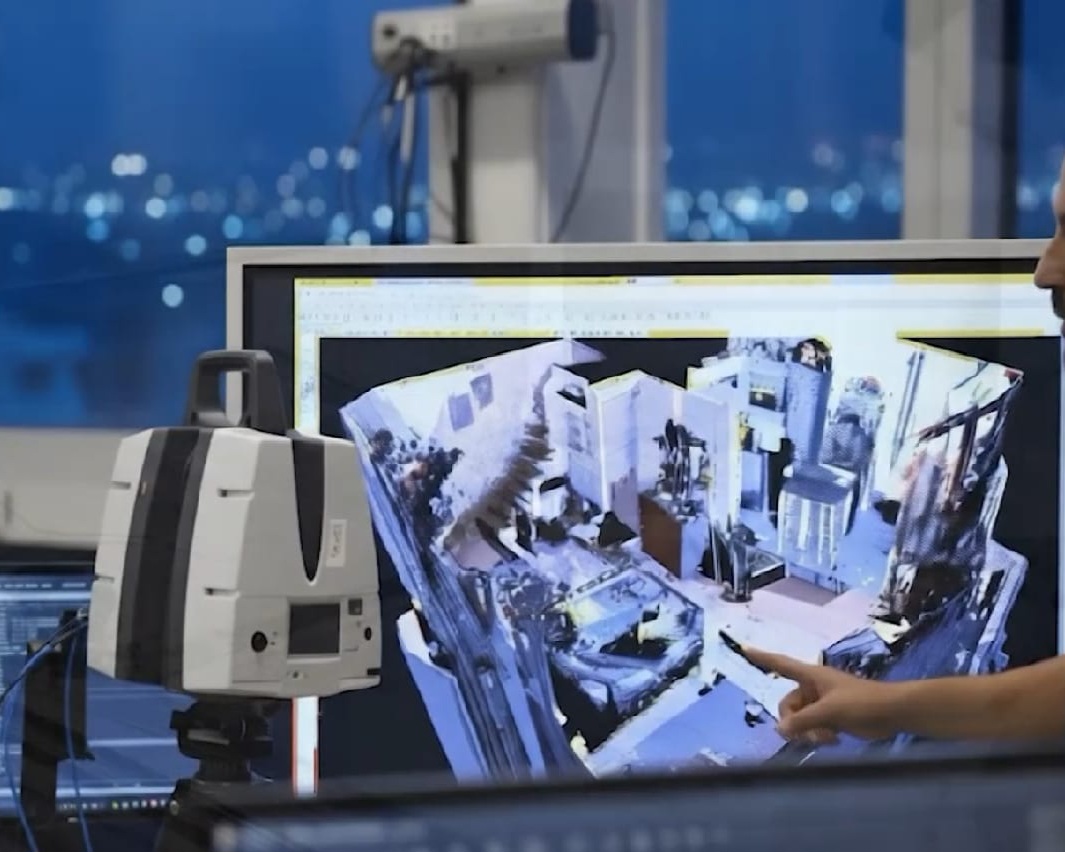
Within the collaboration, RaCIS will contribute its operational expertise in forensic investigations by acquiring and reconstructing simulated scenarios and traces through photogrammetric techniques and laser scanning. CRS4, through its Visual and Data-intensive Computing (ViDiC) sector, will provide scientific expertise in mathematical modeling, visual and geometric computing, and complex data processing, developing the algorithmic solutions required for dimensional analysis and three-dimensional scene reconstruction.
The collaboration also includes the dissemination of scientific results through participation in conferences and the publication of joint research outcomes in specialized journals, contributing to the advancement of knowledge in the field of digital forensic technologies.