
CRS4 participated in the 15th AIUCD Conference 2026 – Digital and Public Engagement: Practices and Perspectives in the Digital Humanities, hosted by the University of Cagliari, with the scientific contribution “HCI and Artificial Intelligence for Cultural Heritage Enhancement: The Case of Narrative Museums and Living Archives.”
The work, presented by Samuel Aldo Iacolina and co-authored with Manuela Angioni, Valentina Marotto, Francesca Mura and Piergiorgio Palla, explores the enhancement of cultural heritage through the integration of Artificial Intelligence (AI), Human-Computer Interaction (HCI), and digital technologies for cultural content access and engagement.
The contribution highlights how the integration of AI, interaction design and distributed architectures can foster new ways of accessing and experiencing cultural content through personalized, inclusive and engaging user experiences designed for diverse audiences.
During the presentation, two case studies involving CRS4 were discussed.
The first focused on the Sinnos project, funded by the Regional Department of Tourism, Handicrafts and Commerce of the Autonomous Region of Sardinia. The project is dedicated to the development of an interactive narrative ecosystem that combines artificial intelligence technologies, interaction design and multimodal models to create accessible and adaptive cultural experiences.
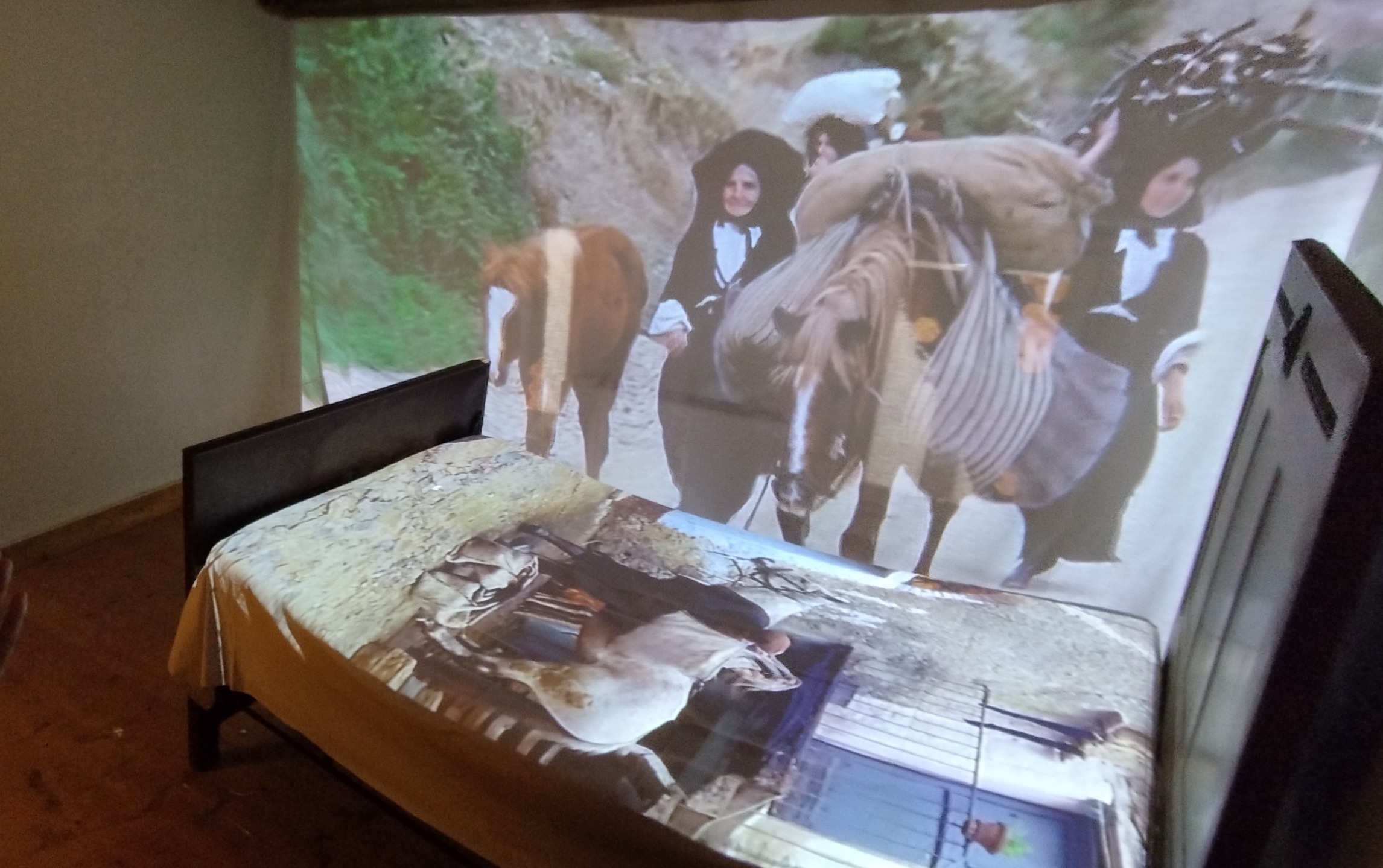
The second case study concerned the Salvatore Cambosu House Museum in Orotelli, an immersive museum experience dedicated to the life and work of the Sardinian writer and anthropologist. The project adopts the metaphor of a “living archive”, where digital content, interactive installations and accessibility tools contribute to the construction of a rich narrative experience. Among the solutions implemented are immersive environments that use audiovisual projections integrated into the museum spaces, transforming objects and rooms into active elements of the storytelling process.
Particular attention was devoted to technologies designed to improve accessibility and inclusion, including tactile systems, gesture-based interfaces and generative models capable of adapting content to the needs of different user groups.
Participation in AIUCD 2026 confirms CRS4’s commitment to developing and experimenting with innovative digital solutions for cultural heritage, with the aim of expanding opportunities for access, interpretation and enhancement of cultural assets.